1 min read
What does it cost companies when work-life balance doesn’t work?
Cornelia Peltenburg : October 23, 2026
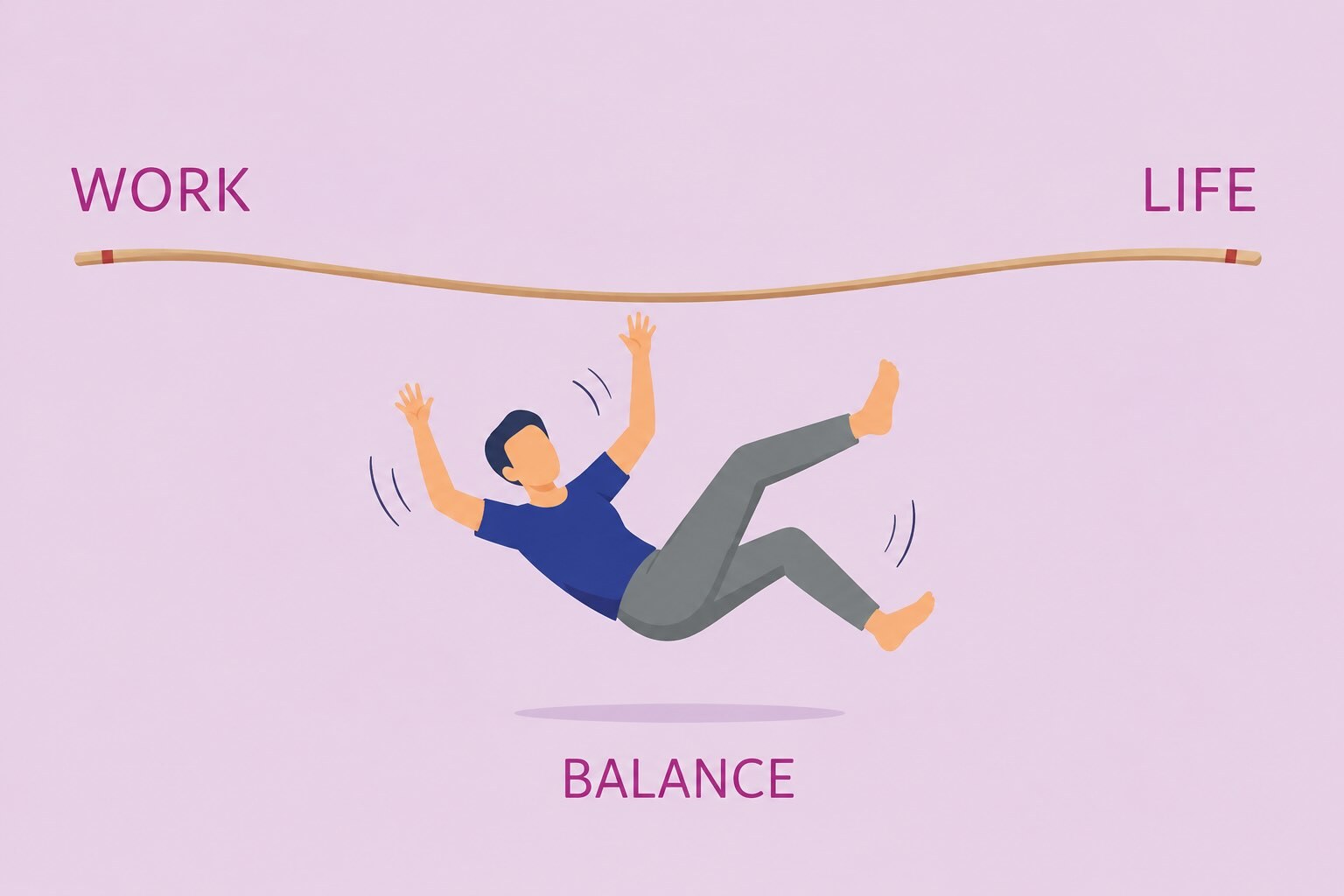
What does it cost a company when employees reduce their working hours because childcare arrangements aren’t working? When qualified specialists don’t return to work after taking time off to look after their families? Or when employees have to put their career goals on hold because they are caring for relatives?
Work-life balance is often seen as an issue for parents. But it’s about much more than that: it’s about how work fits into people’s lives.
A recent study by swissstaffing and gfs-zürich shows that, for 47 per cent of the Swiss workforce, flexibility in terms of working hours and/or location has now become indispensable. At the same time, a good working atmosphere is the most important criterion for 68 per cent when choosing a job – even more so than pay. The survey polled 1,204 people in employment in Switzerland.
The Swiss Family Barometer 2025 also highlights the urgent need for action: 29 per cent of the families surveyed cite the work-life balance as one of the main reasons for the pressure experienced by parents. Working from home and more flexible working hours are cited in particular as the most important measures companies can take.
What is interesting here is that these arrangements benefit not only parents.
Flexible working hours also help employees who are caring for relatives, wish to undertake further training, or simply want to take more control of their own lives. Part-time arrangements can make it easier to return to work – or enable older employees to remain in the workforce for longer. Working from home can reduce commuting times and create more flexibility in everyday life. And a corporate culture that shows understanding for different life situations ultimately boosts job satisfaction for everyone.
As a result, work-life balance is evolving from a traditional ‘family benefit’ into a modern working model that caters to different stages of life.
This presents a major opportunity for employers: those who create conditions that support people in the long term can better retain skilled staff, enhance their appeal as employers and make better use of existing potential.
For 30 years, profawo has been helping employers to create precisely these conditions. After all, work-life balance today no longer simply means juggling family and career. It means shaping a working environment in which people can continue to work successfully even when their lives change.
What is good for families can therefore be good for everyone.